
Working from home can feel more enjoyable when your workspace looks fresh, inviting, and full of life. One of the easiest ways to improve your home office is by adding desk plants. They bring natural beauty, introduce attractive colors, and help create a more comfortable atmosphere for work and study.
Whether you have a small desk, a modern home office, or a cozy workspace, the right indoor plants can make a big difference. From low-maintenance succulents to beautiful trailing plants, there are plenty of options to suit your style and routine.
In this guide, you’ll discover 25 best desk plants for a home office, including easy-care varieties, stylish plants for small desks, and greenery that complements different interior designs. Let’s explore these beautiful home office plant ideas and find the perfect match for your workspace.
1. Snake Plant

The snake plant is one of the best desk plants for people who prefer easy-care greenery. Its tall, upright leaves create a clean and modern look without taking up much horizontal space. Snake plants tolerate a range of indoor lighting conditions, although bright, indirect light often supports healthy growth. They also need relatively little water, making them suitable for busy professionals and students. Place a small snake plant in a neutral ceramic pot beside your monitor or near a bookshelf. Allow the soil to dry between waterings, and use a container with drainage holes to reduce the risk of root rot.
2. Pothos Plant
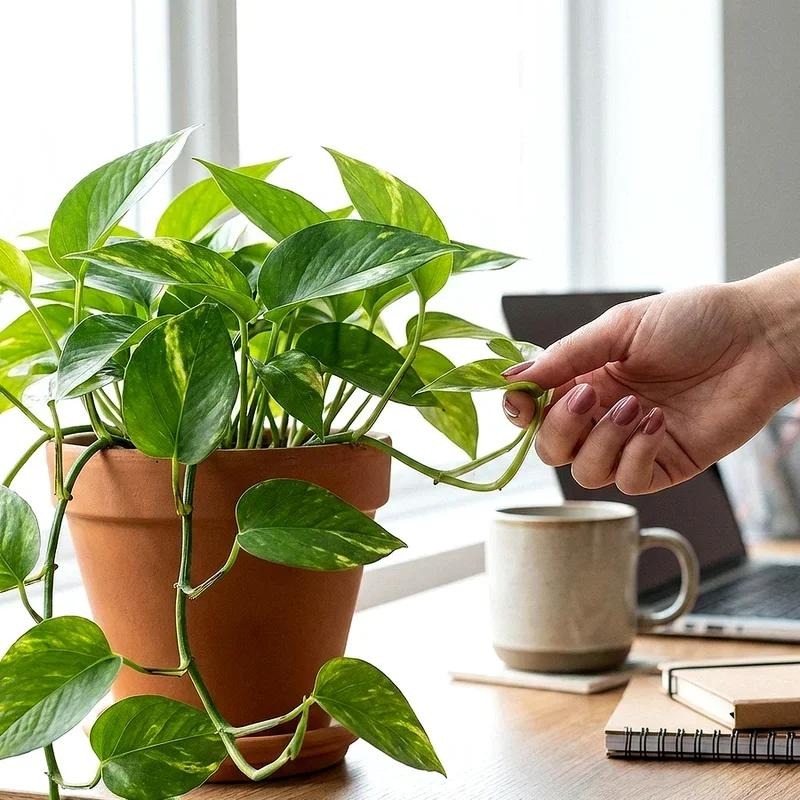
Pothos is a popular choice for home office desks because it grows attractive, heart-shaped leaves and adapts well to indoor environments. Varieties such as golden pothos and marble queen pothos offer different shades of green and cream. This plant looks beautiful in a hanging planter, on a desk shelf, or in a small pot beside your laptop. Pothos generally prefers bright, indirect light but can tolerate lower light, although growth and variegation may change. Water when the top layer of soil begins to dry. Keep pothos away from pets that may chew on its leaves, as it is toxic if ingested.
3. ZZ Plant
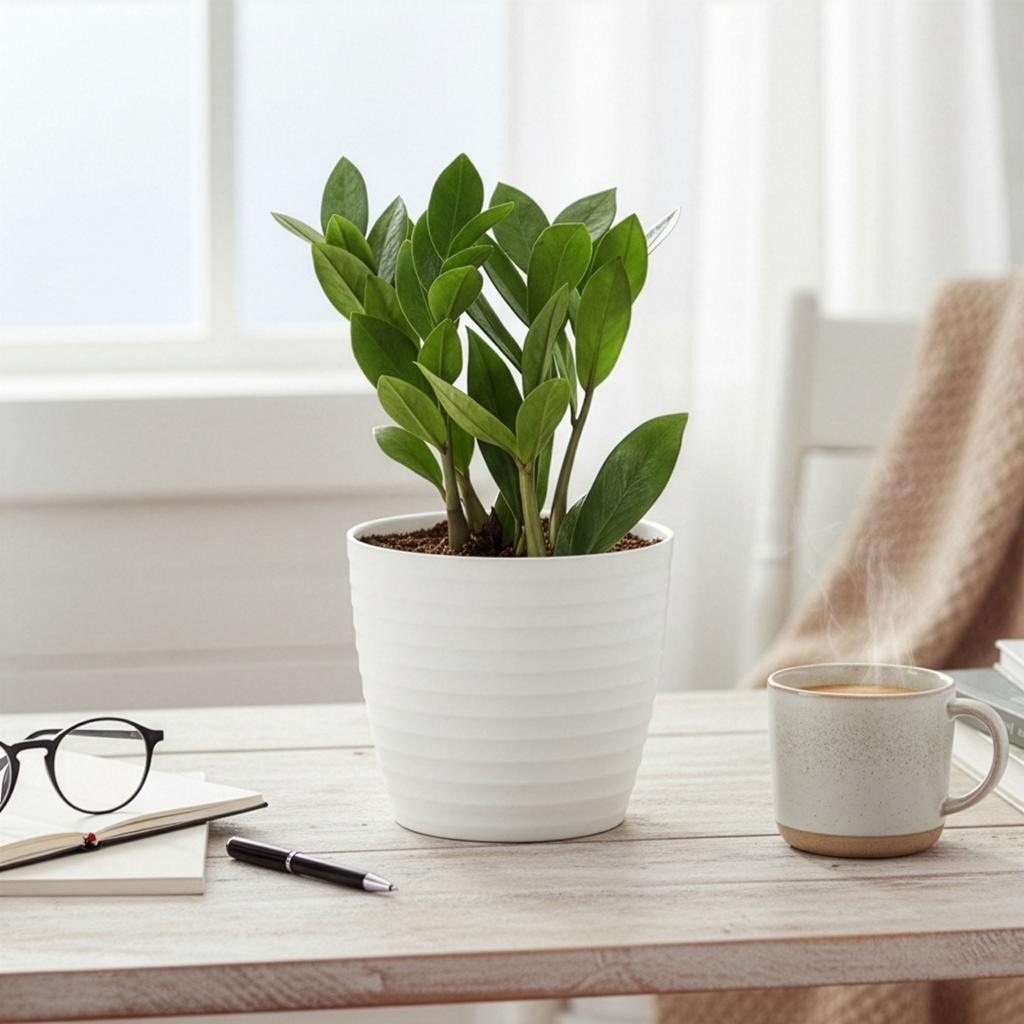
The ZZ plant is ideal for anyone looking for a low-maintenance desk plant with a polished appearance. Its thick, glossy leaves add a rich green color to modern and minimalist workspaces. ZZ plants tolerate low-light conditions and can handle periods of dry soil, making them useful for people who sometimes forget to water their plants. Choose a compact variety for a small desk or place a larger specimen on a nearby cabinet. Bright, indirect light can support stronger growth, but avoid keeping the plant in constantly wet soil. ZZ plants are toxic if ingested, so consider their placement if pets or children have access to them.
4. Peace Lily
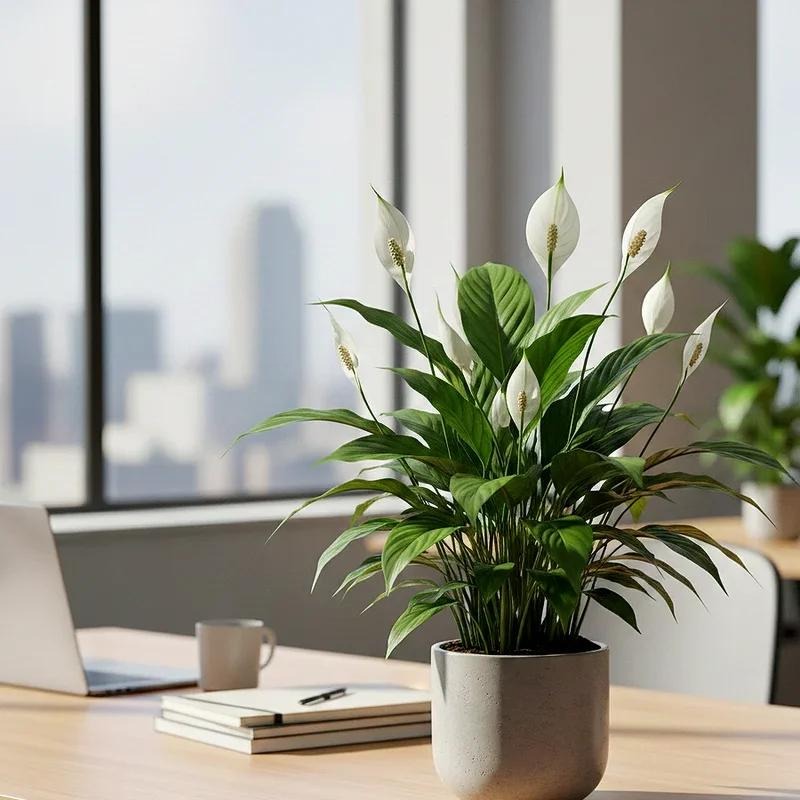
Peace lilies are beautiful indoor plants known for their dark green leaves and white, hood-shaped flowers. They can add a soft, natural touch to a home office while complementing contemporary and traditional décor. Peace lilies typically grow well in bright, indirect light, although they can tolerate lower light. They need more consistent moisture than drought-tolerant plants, so check the soil regularly and avoid letting the roots sit in water. Place a peace lily in a decorative planter near a window with filtered light. Because peace lilies are toxic if ingested, they may not be the right choice for homes with curious pets.
5. Small Succulents

Small succulents are excellent desk plants for adding character without using much space. Their unique shapes, thick leaves, and varied colors create an attractive decorative display. Popular choices include haworthia, echeveria, and certain compact sedum varieties. Most succulents prefer bright light, so place them near a sunny window or provide suitable grow lighting when necessary. Use a well-draining soil mix and water only when the soil has dried sufficiently. A collection of two or three small succulents in matching pots can create a stylish arrangement. If your office has limited natural light, select a shade-tolerant species rather than assuming all succulents will thrive.
6. Spider Plant

Spider plants bring a fresh and relaxed feeling to workspaces with their long, arching leaves. Many varieties feature green and white striped foliage that adds visual interest to a desk or shelf. They generally prefer bright, indirect light and can adapt to a range of indoor conditions. Spider plants are also known for producing small plantlets that hang from mature stems, creating a charming display. Place one in a lightweight pot beside your computer or on a raised shelf. Water when the soil begins to dry, and ensure excess water can drain away. Spider plants are considered nontoxic to cats and dogs, making them a practical option for many pet owners.
7. Lucky Bamboo
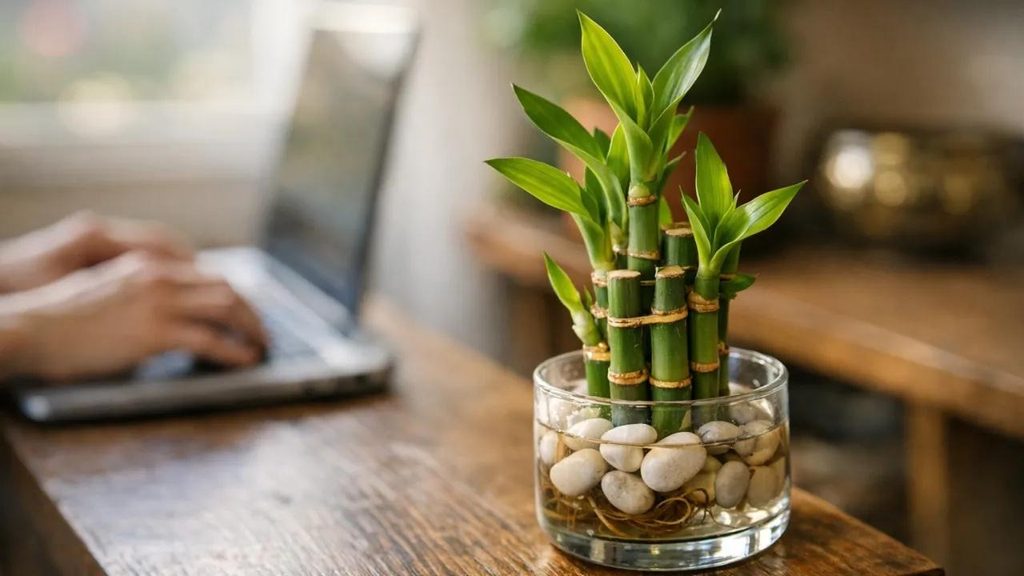
Lucky bamboo is a popular decorative plant that adds a simple, calming appearance to home office interiors. Its slender green stalks work well with minimalist desks, wooden furniture, and contemporary accessories. Despite its common name, lucky bamboo is a species of Dracaena rather than true bamboo. It can grow in water or soil, depending on the setup, and generally prefers bright, indirect light. If you grow it in water, use a clean container and change the water regularly. Lucky bamboo is toxic to cats and dogs if ingested, so keep it in a location that pets cannot reach.
8. Aloe Vera
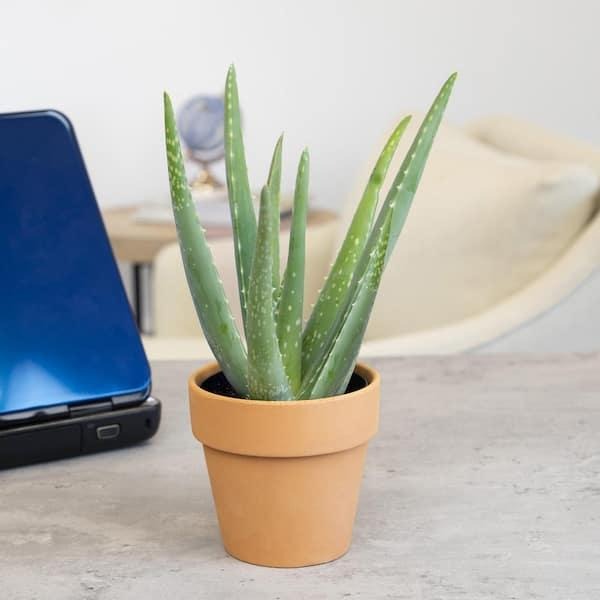
Aloe vera is a striking succulent that can bring a natural, earthy look to your home office. Its fleshy, pointed leaves create an architectural appearance that works especially well in modern and minimalist décor. Aloe vera prefers bright light, including suitable sunlight near a window, and requires well-draining soil. Let the soil dry between waterings to prevent excessive moisture around the roots. A small aloe plant in a terracotta pot can look beautiful beside a notebook, lamp, or computer stand. Although aloe vera is often grown for its gel, you should not treat a desk plant as a substitute for medical advice or assume every home-grown preparation is safe.
9. English Ivy

English ivy is a beautiful trailing plant that can add movement and texture to your workspace. Its small, lobed leaves look attractive when placed on a raised shelf or allowed to trail from a decorative planter. English ivy generally prefers bright, indirect light and consistent care, with suitable airflow helping reduce some common plant problems. It may require more attention than drought-tolerant desk plants, especially indoors where conditions can be dry. Keep the soil appropriately moist without waterlogging it. English ivy is toxic if ingested, so consider a location away from pets and children.
10. Rubber Plant

Rubber plants are known for their large, glossy leaves and elegant appearance. A compact rubber plant can become a beautiful focal point in a home office, particularly when paired with natural wood furniture and neutral colors. They typically prefer bright, indirect light, and variegated varieties may need stronger light to maintain their leaf patterns. Allow the upper layer of soil to dry before watering, and avoid placing the plant in a constantly cold or drafty location. A small rubber plant works well beside a desk, while larger specimens can decorate a nearby corner. Rubber plants are toxic if ingested by pets.
11. Fittonia (Nerve Plant)

Fittonia, also called the nerve plant, is a colorful option for anyone who wants a desk plant with eye-catching foliage. Its leaves often feature contrasting green, pink, white, or red veins that create a decorative pattern. Fittonia generally prefers bright, indirect light, higher humidity, and consistently moist but well-drained soil. It can be a good choice for a small workspace where you want a compact plant with plenty of visual detail. Place it away from harsh direct sunlight and check the soil frequently. Its compact growth makes it suitable for desk arrangements, terrariums, and small decorative planters.
12. Chinese Money Plant

The Chinese money plant, scientifically known as Pilea peperomioides, is a stylish indoor plant with round, coin-shaped leaves. Its simple shape makes it a popular choice for Scandinavian, minimalist, and modern home office décor. Place it in a small ceramic pot near a bright window where it receives indirect light. Rotate the pot occasionally so the plant can grow more evenly toward the light. Water when the upper layer of soil dries, and use a pot with drainage holes. Its unusual foliage adds personality without overwhelming a compact workspace. Remember that growth and watering needs depend on your room’s light, temperature, and humidity.
13. Mini Monstera
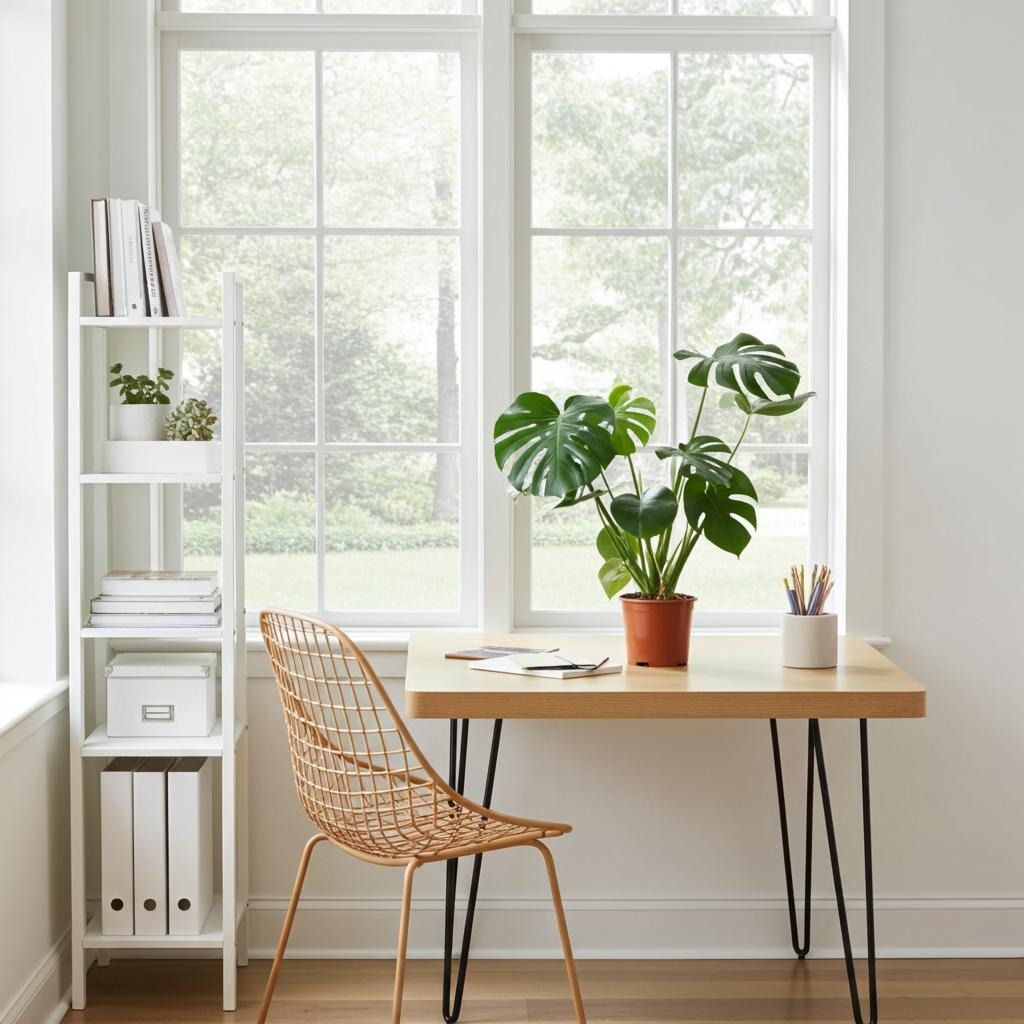
A mini monstera can give your home office a tropical and stylish atmosphere. The name commonly refers to Rhaphidophora tetrasperma, a climbing plant with split leaves that resemble those of a Monstera. It grows best in bright, indirect light and benefits from support as it climbs. A small specimen can fit on a desk initially, but it may need pruning or relocation as it grows. Choose a pot that matches your office color scheme, such as white, beige, or matte black. Avoid excessive watering, and provide a suitable trellis or support if you want a more structured display.
14. Air Plant

Air plants, or Tillandsia, offer a creative way to decorate a workspace without using traditional soil-filled pots. They can be displayed in small holders, on decorative stands, or in carefully designed arrangements. Air plants need suitable light, airflow, and regular hydration, even though they do not grow in ordinary potting soil. Their care routine varies by species and indoor conditions. Place them in a bright area away from harsh, prolonged direct sunlight, and follow appropriate watering and drying practices. Their unusual appearance makes them a great choice for modern home offices where you want something different from conventional potted plants.
15. Boston Fern

Boston ferns add soft texture and lush green foliage to a home office. Their feathery fronds create a relaxed atmosphere and pair beautifully with wooden desks, woven baskets, and natural décor. However, Boston ferns can be more demanding than some other desk plants. They generally prefer bright, indirect light, consistently moist soil, and moderate to higher humidity. Avoid letting the soil dry out completely for long periods, and provide good airflow without exposing the plant to harsh drafts. A compact fern can sit on a desk corner or nearby stand, but you should account for its spreading fronds when planning your workspace.
16. Jade Plant

Jade plants are attractive succulents with thick stems and fleshy, oval-shaped leaves. Their sculptural form brings a natural yet refined look to home office spaces. Jade plants generally prefer bright light and well-draining soil, with watering spaced out as the soil dries. They can grow slowly indoors and may develop a small tree-like shape over time with appropriate care. Place a compact jade plant near a bright window, but protect it from unsuitable temperature extremes. A simple clay or ceramic pot can highlight its green leaves and complement a clean, organized desk setup.
17. Calathea
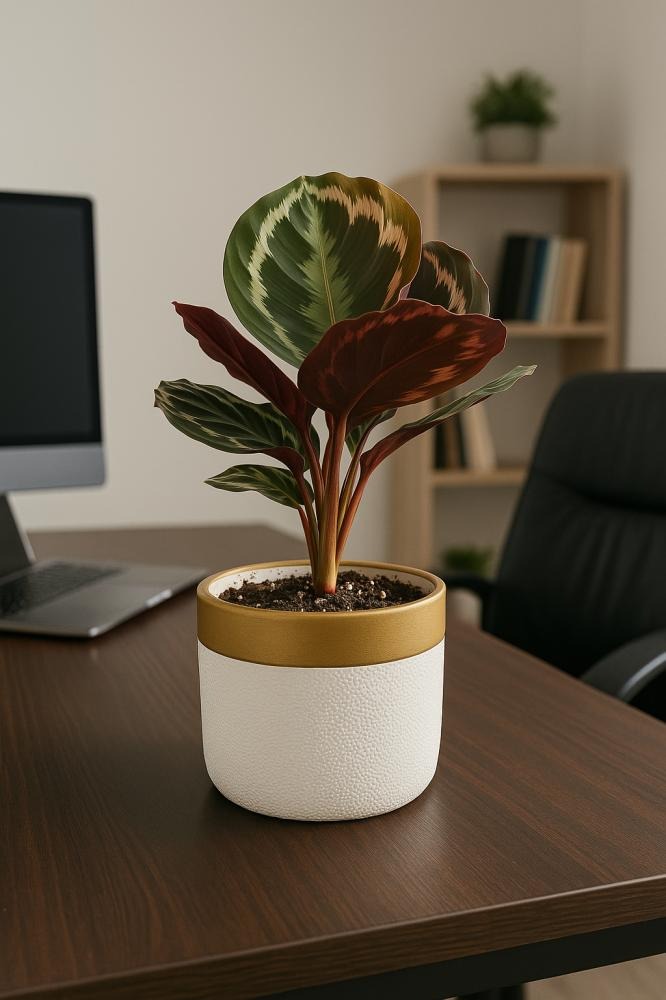
Calatheas are known for their decorative leaves, which often feature stripes, patterns, and contrasting shades. They are ideal for adding visual interest to a home office where you want more than plain green foliage. Many calathea varieties prefer bright, indirect light, evenly moist soil, and moderate to higher humidity. They can be sensitive to inconsistent care, so they may require more attention than a snake plant or ZZ plant. Keep them away from harsh sunlight and check moisture regularly. Choose a smaller variety for your desk, or place a larger specimen on a nearby plant stand to create a layered arrangement.
18. Parlor Palm
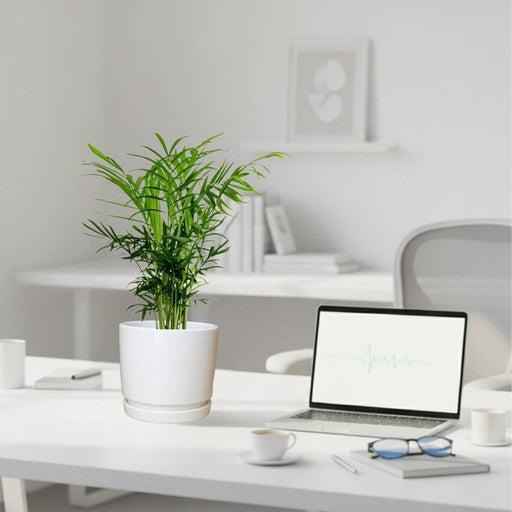
Parlor palms bring a tropical touch to indoor spaces with their graceful, arching fronds. They can work well in home offices that feature warm wood tones, neutral colors, and natural textures. Parlor palms generally tolerate lower light than many sun-loving plants, although bright, indirect light can support healthy growth. Water when the upper layer of soil begins to dry, while avoiding prolonged waterlogging. A compact palm can decorate the corner of a larger desk or sit on a nearby cabinet. Its soft foliage helps balance the sharp lines of computers, monitors, and office furniture.
19. African Violet

African violets are compact flowering plants that can add color to a home office throughout suitable growing conditions. Their soft leaves and delicate flowers make them a charming choice for desks, shelves, and small side tables. They generally prefer bright, indirect light and evenly moist soil. Water carefully and avoid leaving the leaves wet for extended periods, as proper care helps reduce common problems. A small African violet in a decorative pot can bring purple, pink, or white flowers into an otherwise neutral workspace. Select a location with suitable light and enough room for the plant to grow without being disturbed.
20. Peperomia
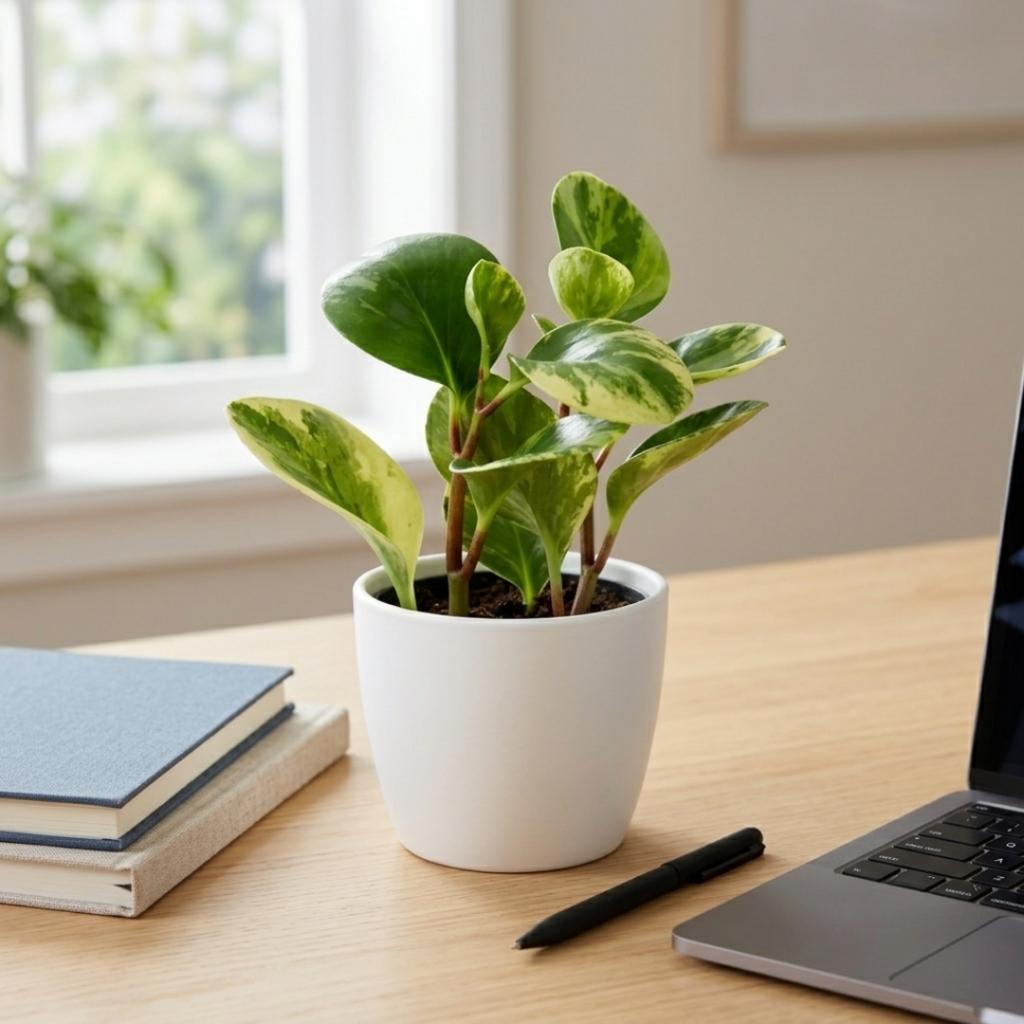
Peperomia is a diverse group of compact indoor plants that can fit beautifully into home office settings. Depending on the variety, its leaves may be thick, rounded, striped, or textured. Many peperomias prefer bright, indirect light and moderately dry conditions between waterings, though care varies by species. Their relatively compact growth makes them useful for small desks and narrow shelves. Choose a decorative pot that complements your workspace, and ensure it has adequate drainage. Peperomia is a practical plant group to explore when you want different leaf shapes without choosing a large indoor plant.
21. Baby Rubber Plant

The baby rubber plant, commonly referring to Peperomia obtusifolia, is a compact plant with thick, smooth leaves. It offers a simple and polished appearance that works well in contemporary home office designs. Many varieties prefer bright, indirect light and well-draining soil. Let the soil dry somewhat between waterings, and avoid keeping the roots constantly wet. Its small size makes it easy to place beside a laptop, notebook, or desk lamp. Green and variegated forms provide different decorative effects, so you can choose one that matches your preferred interior color palette.
22. Cast Iron Plant

The cast iron plant, or Aspidistra elatior, is known for its durable nature and attractive, broad green leaves. It can tolerate lower-light indoor conditions and may suit offices where direct sunlight is limited. Although it is not always a small desk plant, a young or compact specimen can work in a spacious workspace or on a nearby stand. Water when the soil begins to dry, and use a well-draining potting mix. Its simple foliage creates a calm and natural appearance, especially in home offices decorated with wood, cream, and muted green tones.
23. Haworthia
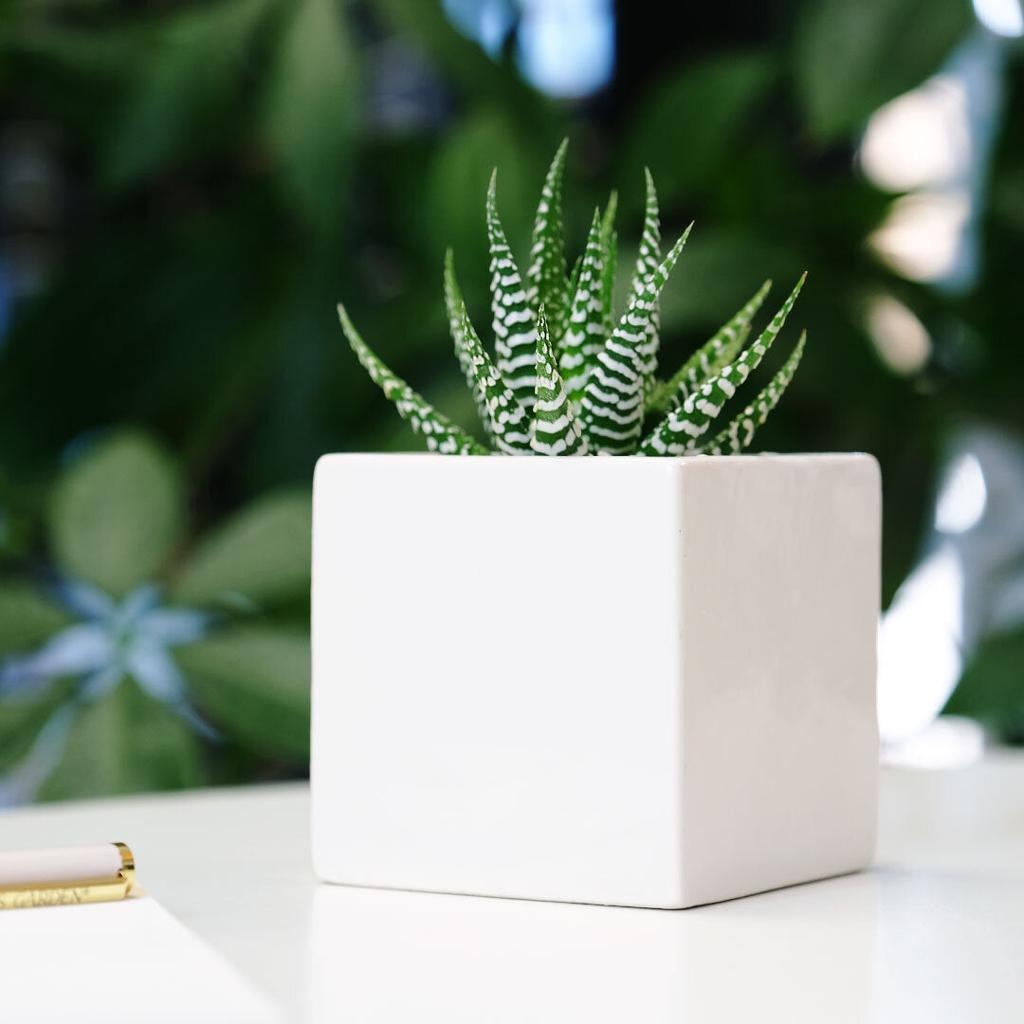
Haworthia is a compact succulent that works particularly well for small desks and minimalist office spaces. Its pointed leaves and distinctive patterns add character without requiring a large planter. Many haworthias prefer bright, indirect light and well-draining soil. Water thoroughly when needed, then allow the soil to dry before watering again. Avoid placing the plant in an area with prolonged harsh sunlight unless the specific variety can tolerate it. A small haworthia in a simple white or terracotta pot can create a neat decorative accent beside your monitor or on a shelf.
24. Tradescantia
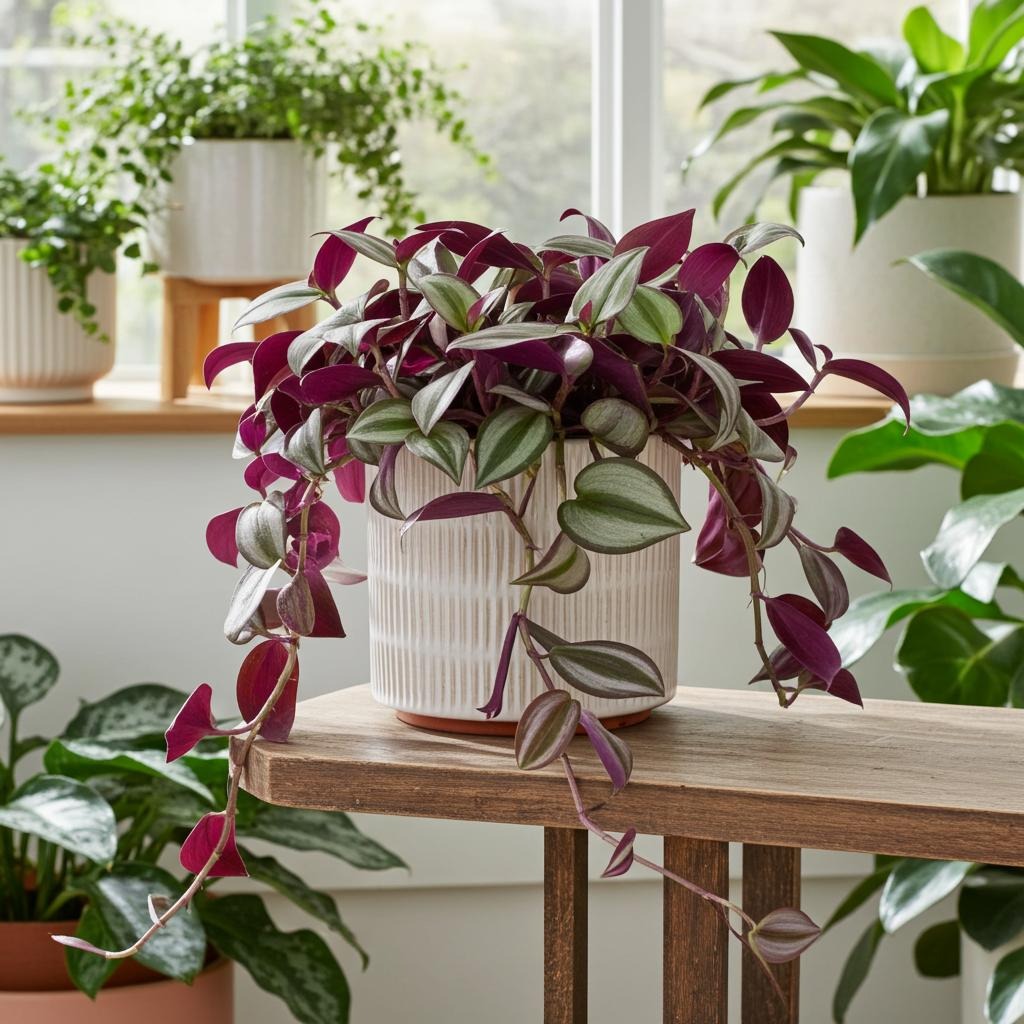
Tradescantia is a colorful indoor plant group that includes varieties with purple, green, silver, and striped leaves. Its trailing growth can add a lively decorative element to a desk shelf or elevated planter. Many types prefer bright, indirect light, and sufficient light can help maintain attractive foliage colors. Allow the soil to dry slightly between waterings, depending on the variety and indoor conditions. Pruning can help maintain a compact shape and encourage fuller growth. Use a planter that allows the stems to trail naturally without interfering with your workspace.
25. Miniature Orchid
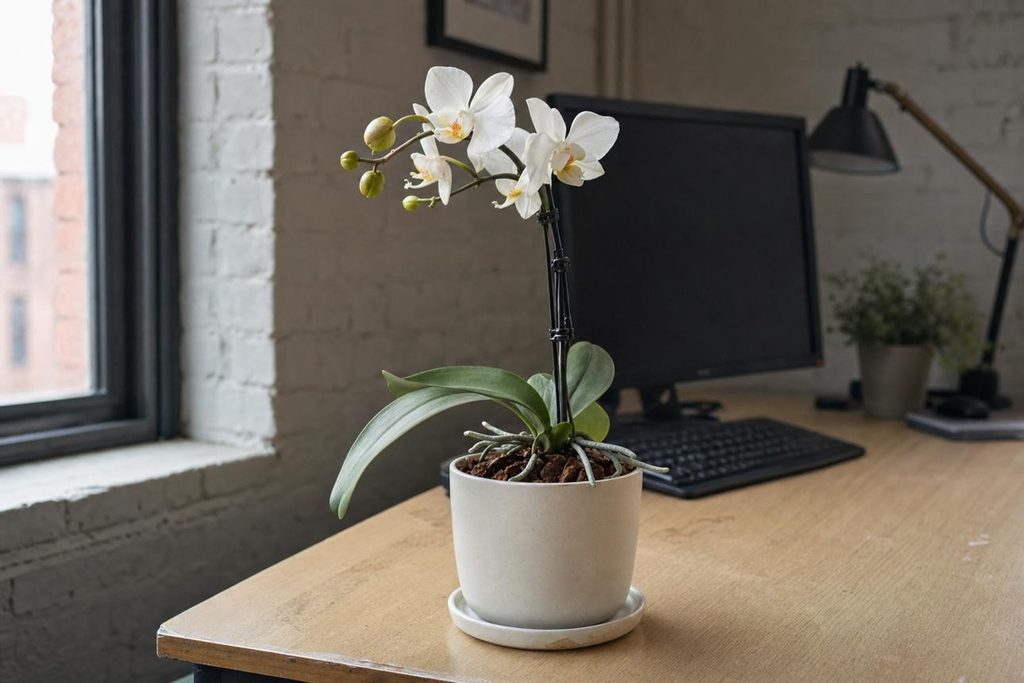
A miniature orchid can bring a refined and elegant touch to your home office. Phalaenopsis orchids are popular for their attractive flowers and long-lasting blooms under suitable conditions. They generally prefer bright, indirect light and a specialized, well-aerated growing medium rather than ordinary dense potting soil. Water according to the plant’s needs and growing medium, allowing excess moisture to drain away. A small orchid in a decorative pot can look beautiful on a clean desk, especially when paired with neutral accessories. Orchids may need more specific care than low-maintenance foliage plants, but their flowers can create a striking visual accent.
How To Choose The Best Desk Plant For Your Home Office
Choosing the right desk plant depends on your workspace size, available light, daily routine, and interior design. A plant that thrives on a sunny windowsill may struggle in a dark office, while a moisture-loving variety may need more care than you want to provide.
Consider these factors before buying your next desk plant.
1. Check Your Office Lighting
Lighting is one of the most important factors in plant care. Observe how much natural light your desk receives throughout the day. Bright, indirect light works well for many popular houseplants, while certain varieties tolerate lower light. Remember that low-light tolerance does not mean a plant can thrive in complete darkness. If your workspace has limited sunlight, consider moving plants closer to a suitable window or using an appropriate grow light.
2. Consider Your Desk Size
A small desk can quickly feel crowded when you add large pots and spreading foliage. Choose compact plants such as haworthia, peperomia, fittonia, or small succulents if your workspace has limited room. Larger offices can accommodate plants on shelves, cabinets, or separate stands. Keep enough space for your keyboard, monitor, notebooks, and other essentials. The goal is to add greenery without making your workspace uncomfortable or difficult to use.
3. Choose Low-Maintenance Plants
If you have a busy schedule, low-maintenance plants can make your office decorating routine easier. Snake plants, ZZ plants, and many haworthias can tolerate periods of dry soil. However, every plant still needs appropriate light, watering, and basic care. Avoid choosing a plant only because it is labeled easy-care. Review its actual growing requirements and select a variety that matches your home environment.
4. Match Plants With Your Interior Style
Your desk plants should complement the overall design of your home office. For a minimalist workspace, choose plants with clean shapes and simple ceramic pots. If you prefer a cozy or bohemian style, trailing plants and woven planters can add texture. Modern offices often look attractive with sculptural succulents, rubber plants, or carefully arranged greenery. Select pot colors and plant sizes that work with your existing furniture rather than creating unnecessary visual clutter.
5. Think About Pet Safety
Some popular houseplants can be harmful if cats, dogs, or children ingest them. Before purchasing a plant, check reliable information about its toxicity and consider whether pets can access your workspace. Plants such as spider plants and parlor palms are commonly considered pet-friendlier options, while pothos, peace lilies, and ZZ plants require more caution. Pet safety depends on the plant species and the animal, so choose carefully and seek veterinary advice if ingestion occurs.
Tips For Caring For Desk Plants
Keeping your home office plants healthy requires a few simple habits. Start by learning the watering and lighting needs of each plant rather than using the same routine for every variety.
- Use pots with drainage: Proper drainage helps reduce the risk of waterlogged soil and root problems.
- Check the soil: Feel the soil before watering, as moisture needs vary by plant type.
- Provide suitable light: Place plants where they receive the amount of light they need.
- Clean the leaves: Gently remove dust from suitable foliage to keep the plant looking fresh.
- Rotate your plants: Turn pots occasionally if growth becomes uneven toward a light source.
- Inspect for pests: Check leaves and stems regularly for signs of insects or plant stress.
- Avoid overwatering: Too much water can damage roots, even when a plant looks thirsty.
A consistent but simple care routine can help your desk plants stay attractive and healthy for longer.
Benefits Of Adding Plants To Your Home Office
Desk plants can improve the visual appeal of your workspace and help create a more inviting environment. Green foliage introduces natural colors and texture, which can make an office feel less sterile and more personal.
Plants can also encourage you to pay attention to your surroundings and take short breaks for watering or basic care. However, the effects of plants on productivity, stress, and indoor air quality depend on several factors, and a few desk plants should not be treated as a guaranteed solution for air purification or workplace performance.
The biggest practical benefit is that plants allow you to customize your office in an affordable and flexible way. With the right plant and placement, you can create a workspace that feels more comfortable and reflects your personal style.
Creative Ways To Display Desk Plants
You don’t need to place every plant directly beside your keyboard. Creative placement can help you maintain a clean and organized desk while adding more greenery.
Try placing a trailing pothos on a shelf, arranging small succulents beside your monitor, or using a plant stand near the desk. A wall-mounted shelf can provide extra display space in a small office. You can also group plants of different heights to create a layered arrangement.
Use matching pots for a cohesive look, or combine materials such as ceramic, terracotta, and natural wood for a more relaxed appearance. Keep plants away from electronics where water spills could cause damage, and ensure they do not block your screen or workspace lighting.
Common Mistakes To Avoid When Decorating With Desk Plants
Even beautiful desk plants can become difficult to maintain when they are placed incorrectly. One common mistake is choosing a plant based only on its appearance without checking its lighting and watering requirements.
Another issue is overwatering, especially when plants are kept in decorative containers without drainage. Crowding too many plants onto a small desk can also reduce working space and make cleaning difficult.
Avoid placing moisture-sensitive plants near strong air-conditioning drafts or in unsuitable direct sunlight. Instead, choose plants that match your room’s conditions and give each one enough space. Thoughtful placement and basic care will help your office greenery remain attractive without creating extra stress.
Final Thoughts On The Best Desk Plants For Your Home Office
Adding desk plants is a simple way to bring freshness, natural beauty, and personality into your home office. Whether you prefer a low-maintenance snake plant, a colorful fittonia, a trailing pothos, or an elegant orchid, there is a plant to suit different decorating styles and care routines.
Before choosing your favorite, consider your office lighting, available desk space, watering habits, and pet safety needs. Start with one or two suitable plants, then expand your collection as you learn what grows well in your environment.
The best desk plant is not just the one that looks beautiful—it’s the one that fits your workspace and the care you can provide. With the right choices, you can create a stylish, welcoming home office that feels more connected to nature.
